The night of November 4–5, will bring a rare overlap of two astronomical events: the Beaver supermoon, the closest and brightest full Moon of the year, and the Southern Taurid meteor shower.
At its fullest, the Moon will be about 356 980 km (221 818 miles) from Earth, reaching maximum illumination at 13:19 UTC on November 5. According to NASA, a supermoon appears about 7% larger and up to 30% brighter than the faintest full Moon of the year. Because the Moon’s orbit is slightly elliptical, its closest point, known as perigee, occasionally coincides with the full phase, producing this optical enhancement.
The November full Moon is traditionally known as the Beaver Moon in North America, marking the season when beavers prepare for winter. It is the second of three consecutive full supermoons in 2025, with the final one expected on December 6.
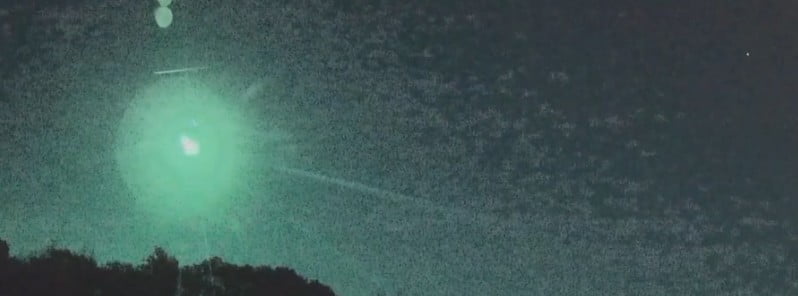
The Southern Taurids, a meteor stream created by debris from Comet 2P/Encke, will reach their maximum around November 4–5. The 2025 display occurs during what astronomers call a “swarm year,” when Earth crosses a denser trail of larger fragments from the comet.
American Meteor Society expert Robert Lunsford said some of these meteoroids, which range in size from baseballs to basketballs, can produce fireballs visible even under the bright glare of a full Moon.
Under ideal dark-sky conditions, the Southern Taurids typically produce about five meteors per hour. During a swarm year, the number of bright fireballs may increase slightly.
To make the supermoon accessible to a global audience, the Virtual Telescope Project will host a free live broadcast from Manciano, Italy, beginning at 19:00 UTC on November 5.
Astrophysicist Gianluca Masi will present the session, featuring real-time views of the Moon’s rise and a selection of past full Moon images captured over the skyline of Rome. The stream will be available through the project’s webTV page.
Observers wishing to view the Taurids should aim for the midnight to pre-dawn interval, after the radiant in Taurus has risen significantly. Astronomers recommend allowing 30 minutes for the eyes to adapt to the dark and avoiding direct moonlight to maximise contrast
References:
1 Meteor Shower Calendar – IMO – Accessed on November 4, 2025
2 Supermoons – NASA – Accessed on November 4, 2025