- Gaia23bra b is a super-Jupiter exoplanet orbiting an orange dwarf star. It orbits farther out from its star than most exoplanets found so far.
- NASA’s TESS space telescope discovered it because the planet’s gravity bent and magnified the light of a more distant background star.
- Gaia23bra b is one of only about 5% of exoplanets found by microlensing so far. But astronomers expect to find many more.
Your support = more science, more stars, more wonder. Donate to EarthSky and be part of something bigger.
Warped spacetime reveals an exoplanet
Astronomers discover most exoplanets when they pass in front of their stars. Sometimes they discover one when they see a star wobbling slightly due to the planet’s gravity. But researchers at the University of New Mexico have just found a new exoplanet another way: by its warping of spacetime.

When a star passes in front of another star from our perspective, its gravity can magnify and intensify the more distant star’s light. This is called gravitational microlensing, and it’s not uncommon. But when the now-retired Gaia space telescope recorded one such event in 2023, something was different. The change in the star’s brightness wasn’t smooth. It suggested a smaller object was orbiting the nearer star.
Researchers then found that NASA’s TESS (Transiting Exoplanet Survey Satellite) had also recorded the event. And TESS’ more in-depth data was able to confirm that this light signature was caused by a planet orbiting the star. The planet – a super-Jupiter now known as Gaia23bra b, 40,000 light-years away – had warped the fabric of the universe enough with its gravity that it perceptibly magnified a distant star’s light.
The researchers said on July 1, 2026, that this is the first time TESS has discovered a new exoplanet using this gravitational microlensing technique.
Co-author Diana Dragomir at the University of New Mexico said:
When TESS launched, no one expected it to ever be capable of finding this kind of planet.
The researchers published the peer-reviewed details of the new discovery in The Astrophysical Journal Letters on July 1, 2026.
Microlensing reveals a distant world
Astronomers discover most exoplanets when they pass in front of their star (transit method) or when their gravity tugs on their star (radial velocity method). About 3/4 of TESS’ planets have been found using the transit method. But the discovery of Gaia23bra b was different. Astronomers detected it during a gravitational microlensing event.
When Gaia and TESS observed the star system, the star-planet combination magnified a background star. The mass of the foreground star and its planet bent spacetime and acted as a “lens,” magnifying the background star’s light as the two systems briefly aligned in the sky.
Lead author Mallory Harris at the University of New Mexico also noted:
Gaia’s observations were too sparse to pick up on the planet. TESS happened to be monitoring the same area of the sky during the event, and its denser time coverage showed extra features in the light curve caused by a planet.
Why microlensing?
The astronomers used the microlensing method in this case because the method is especially effective with planets that orbit farther out from their stars, as Gaia23bra b does.
Most exoplanets discovered so far have been close to their stars, because that makes them easier to detect. To date, microlensing has found less than 5% of known exoplanets. But those discoveries are important, because they reveal planets farther from their stars. That includes planets more like Jupiter, Saturn, Uranus and Neptune.
Microlensing is also the only method that can routinely find Earth-mass planets at earthlike distances from their stars.
As Harris explained:
The main advantage of microlensing lies in the kinds of planets it is sensitive to. Planets that orbit very close to their host stars effectively blend with the star’s mass and do not produce a distinct microlensing signal. With microlensing, we can find smaller planets with greater orbital distances, including worlds in the habitable zone of their star and even farther away.
Microlensing isn’t the only tool we need
Dragomir added:
Transits and microlensing are very complementary because they each reveal a category of planet the other may not be able to detect. And they offer different details. Transits give us the size of a planet, and in concert with other methods, we can determine its mass and density. Microlensing gives us masses and orbital distances for planets we’d otherwise never see.
Making the most of a brief opportunity
Gaia and TESS were lucky to detect the exoplanet when they did. Microlensing events only happen once and then they’re gone. They don’t repeat. Harris said:
I like to joke that we’ll probably find the first Earth analog with microlensing, and then wave at it as it goes by because we’ll never see it again.
Finding planets through microlensing is therefore a relatively rare occurrence. But scientists think they will find more. Dragomir said:
The discovery implies that there are probably other microlensing planets hiding in TESS’ data that we hadn’t previously thought to look for.
Harris added:
TESS has been observing the sky for nearly eight years and has repeatedly monitored regions along the Galactic Plane, where this system is located. Despite this extensive coverage, Gaia23bra b represents the first definitive microlensing planet discovered using TESS data.

Space telescope team effort
Gaia23bra b is also one of the few microlensing exoplanets found using space-based data (Gaia and TESS). And Gaia and TESS did so in different ways. Gaia’s observations were long-term, while TESS’ were every 200 seconds for nearly 60 days. Those faster observations from TESS allowed astronomers to detect subtle features in the microlensing light curve that might otherwise be missed.
Harris said:
Microlensing is currently the only method capable of detecting Earth-mass planets at Earth-like orbital distances, so demonstrating that these techniques work in real datasets is particularly valuable for future searches for potentially habitable worlds.
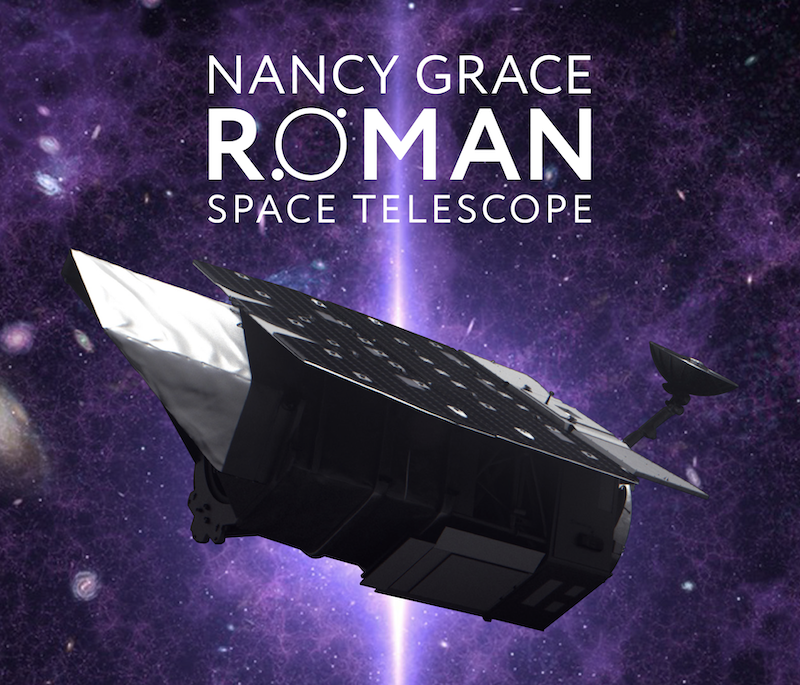
The upcoming Nancy Grace Roman Space Telescope will be able to search for more of these microlensing planets. It is scheduled to launch this summer. As Harris noted:
Gaia23bra b is also one of only a very small number of microlensing planets discovered using space-based data, making it an important case study for the upcoming Nancy Grace Roman Space Telescope.
Roman is expected to find up to 1,000 microlensing planets and 100,000 transiting planets. It’s currently scheduled to launch as early as August 30, 2026.
Bottom line: The Gaia and TESS space telescopes have discovered a Jupiter-like world – Gaia23bra b – by studying warped spacetime.
Source: TESS’s First Bound Microlensing Planet—A Binary Microlensing Event Revealing a Planetary Companion toward the Galactic Plane
Via University of New Mexico
Read more: Enormous rogue super-Jupiter is a surprisingly complex world
Read more: Saturn-mass rogue planet revealed in unique new observations