- Mars is a harsh and deadly place. But could any earthly microbes survive there?
- A new thesis shows how disease-causing earthly microbes could not only survive, but thrive.
- The infectious microbes could potentially become more deadly after adapting to the environment. That’s not good news for future astronauts.
Your support = more science, more stars, more wonder. Donate to EarthSky and be part of something bigger.
Infectious microbes on Mars
Mars is a harsh and unforgiving place. But, eventually, human astronauts are expected to go there. And when they do, they’ll have companions: pathogenic (disease-causing) microbes that live in and on the human body. Could some of them survive?
Tommaso Zaccaria at Radboud University in the Netherlands has written a new thesis about how some of these organisms could live in the Martian environment … or not.
As the thesis synopsis states:
Evaluating how microorganisms respond and tolerate space conditions is essential to ensure the safe access and exploration of space. This thesis investigates the risks associated with the contamination of other planets with microbes originating from Earth, and how the human immune system responds to infections in space.
Andy Tomaswick wrote about the thesis for Universe Today on June 30, 2026.
The thesis was published on June 22, 2026.
Simulating pathogens on Mars
The first part of the thesis deals with four pathogens – infectious microorganisms – from Earth. For instance, one is the pathogen that causes pneumonia.
The four pathogens were added to a simulated Martian environment in the laboratory. The conditions were harsh: extremely low pressure, dessication (extreme dryness), high ultraviolet radiation and high-concentration brines (highly salty water) that contained the highly toxic substance perchlorate.
Any of these could be deadly on their own. But together, they are ultra-deadly.
The experiments tested the microbes in each of the various conditions noted above. And some of the microbes did indeed survive. Some endured 16 days of desiccation, in fact. But the thesis considered all of the above conditions at the same time, as would be found on Mars itself. In that scenario, the survival of the microbes dropped from 16 days to only one.
There is a caveat, though. The regolith – the Martian version of “soil” composed of bits of rock and dust – might actually help microbes. It could be a place for traces of water to hide. It could also help protect microbes from the deadly ultraviolet radiation from the sun.
On the other hand, the regolith also contains perchlorate. That compound is extremely toxic to most life as we know it.
Shrinking microbes
One of the most interesting aspects of the experiments from the first section was that the microbes shrank in size. They became almost invisible to human immune systems. And in another experiment, the microbes were exposed to a human immune cell called peripheral blood mononuclear cells (PBMCs).
As a result, the cells produced fewer cytokines (small proteins) and reactive oxygen species (highly reactive chemicals formed from oxygen molecules (O2), water and hydrogen peroxide).
The bacteria that survived adapted to the cells. And in doing so, they could potentially become even more pathogenic than they already were. Not good news for any future astronauts.

How regolith affects astronauts
In the second part of the thesis, Zaccaria examines how Mars’ regolith – Martian “soil” – might affect the health of the astronauts. He exposed the cells found in a human’s airway and living mice to mockups of both regolith on Mars and the moon.
The human cells experienced local tissue inflammation and neutrophilia, which is an increase in white blood cell activity due to damaged tissue. There was also increased activity in genes that control mucus production and lung fibroids, both precursors to chronic respiratory disease. Again, not good for astronauts.
The lunar dust was even worse in some ways. It was more damaging than the Martian simulant that was laced with perchlorates.
Planetary protection protocols
The third section of the thesis deals with planetary protection protocols, specifically the ones that NASA and other space agencies use for their robotic probes to other planets and moons. In these experiments, microbes were tested to see if they could survive a journey to Jupiter or Saturn.
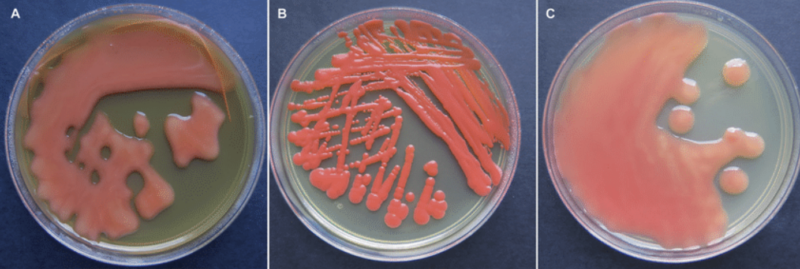
One type of yeast, Rhodotorula frigidalcoholis, fared particularly well. It actually stalled its own growth cycle so it could focus on repairing its damaged DNA.
The thesis synopsis concludes:
The studies of this thesis have showed how the selected microorganisms can tolerate space conditions, and how genes in the selected yeast are regulated under extreme conditions. As a whole this work provides new microbial survival data and aims to improve the healthy access to space for humans.
Bottom line: A new thesis examines how earthly pathogens on Mars could survive and potentially become even more dangerous for future astronauts.
Source: Life beyond earth: microbial survival and immune health in space
Via Universe Today
Read more: New study says microbes on Mars might be living in the ice
Read more: Are methane-belching microbes on Mars hiding underground?